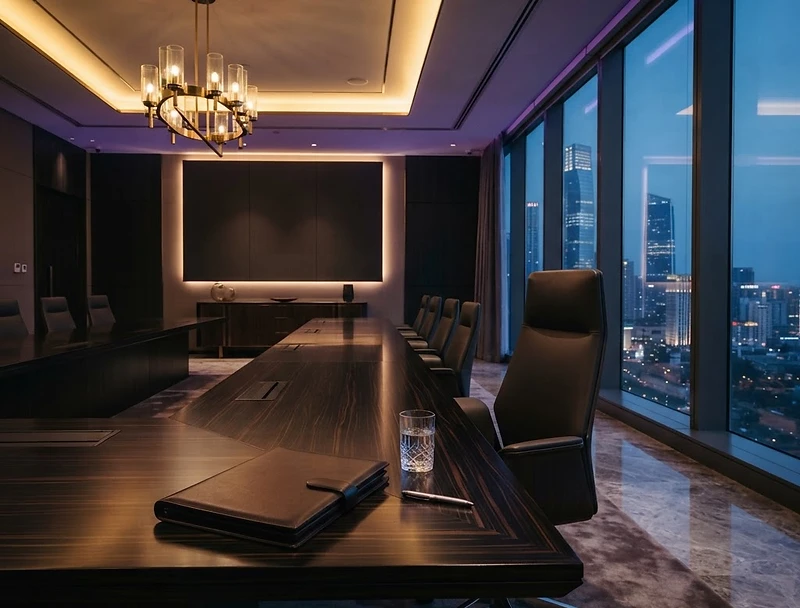
Quarterly Letter2026-10-10
The Cost of Being Easy to Work With
Early in my career, a senior editor handed me the best compliment I had ever received. 'You are a joy to work with,' she said. I carried those words around for years like a medal. It took me a very long time to understand what they had actually cost me.
Being easy to work with sounds like a virtue. In many rooms it is the quiet currency women are paid in instead of money. You take the late assignment without comment. You absorb the colleague's missed deadline. You smooth the meeting when it frays, and you do it so gracefully that nobody notices the labour. The room runs better because of you. And at review time, the room describes you in the warmest possible language, and then promotes someone who made it slightly less comfortable.
I watched this happen for years before I named it. The people who rose were rarely the most agreeable. They were the ones who were clear about what they would not do. They said no early, specifically, and without apology, and the strange thing was that people respected them for it. Boundaries, it turns out, are read as a sign of value. Availability is read as a sign of supply.
Here is the strategic insight I wish someone had handed me at thirty. Every time you make yourself frictionless, you transfer the friction onto your own career. The cost does not disappear. It moves to the one place you cannot easily see it: your trajectory. The work you quietly absorbed was work you did not do for your own visibility. The meeting you smoothed was a meeting where you did not make the argument that would have been remembered.
So this quarter, I want you to run a small audit. List the last five things you agreed to that you did not want to do. Beside each, write who benefited and what it cost you. You will see a pattern, and the pattern will be uncomfortable, and that discomfort is the beginning of your next promotion.
I am not asking you to become difficult. I am asking you to become deliberate. Warmth and clarity are not opposites. The most formidable women I know are some of the kindest people in any room, and they are also entirely unavailable for anything that does not move their work forward.
Choose to be remembered for the quality of your judgement, not the ease of your company. Athena would put it more briefly: stop paying for approval with your time.
With conviction, Franny Ó
— Franny Ó
Welcome Letter2026-09-01
Why I Built This
I built this because the rooms were never built for me.
I want to tell you that plainly, before anything else, because every woman who has ever been underestimated knows the feeling of walking into a room and sensing — in the half-second before anyone speaks — that the room was arranged by and for someone else. The chairs face a certain way. The jokes have a certain rhythm. The decisions were half-made on the golf course, or in the corridor, or in the silence between two men who have known each other for twenty years.
I spent years walking into those rooms. I learned to read them the way a journalist reads a story — for what is said and, more importantly, for what is not. I noticed who was interrupted and who was never interrupted. I noticed whose idea was repeated back, slowly, by a man in a better suit, and how the room nodded as though the idea had just arrived. I noticed the woman who said nothing and carried everything.
And I noticed something else. The women who rose were not the ones who waited to be invited. They were the ones who began, quietly and then not quietly at all, to build their own rooms.
That is what ISPY2INSPIRE is. It is a room built by a woman, for women, with the doors propped open and the chairs arranged so that your voice carries. It is the platform I wished for on every day I sat in a boardroom pretending I belonged, when I already belonged and simply no one had noticed.
Athena — the mentor who lives inside this platform — is the voice I wish I had heard in those rooms. She is strategic, not soothing. She does not tell you to be patient. She tells you, with the precision of someone who has watched a thousand careers, exactly which move to make next. She is the senior woman at the table who leans over and says, "Take that seat. Now. Here is why."
This is a letter, not a sales pitch. I am writing to you the way I would write to a younger version of myself — directly, and with the assumption that you are already brilliant and that the only question is how much faster you intend to move.
If you have arrived here, you have already done the hardest thing. You have decided that the room you have been given is not the room you intend to stay in.
Welcome. The table is built. Your seat is waiting.
— Franny Ó
Quarterly Letter2026-06-15
On Building Your Own Table
There is a piece of advice that gets passed around women's networks like a heirloom, and it goes like this: build your own table.
It is good advice. It is also incomplete. Because what no one tells you is that building the table is the easy part. The harder part is deciding who gets to sit at it — and, more uncomfortably, deciding who does not.
I learned this the slow way. I built my first table — a business, a brand, a room of my own — and I made the mistake that many women make when they have finally escaped someone else's room. I invited everyone. I said yes to every coffee, every favour, every "quick pick your brain." I treated my hard-won table like a public park. And I watched, over a single difficult year, as the table I had built began to look exactly like the rooms I had left: crowded with people who needed me, empty of people who served me.
A mentor — a woman who had built three tables before I built one — said something to me that I have never forgotten. She said, "Franny, the table is not the point. The guest list is the point."
She was right. Power is not a room. Power is the careful, deliberate decision about who enters the room and on what terms. The women I have watched rise fastest are not the ones with the largest networks. They are the ones with the most intentional ones. They keep three kinds of people close: the one who challenges them, the one who champions them, and the one who tells them the truth when the truth is unflattering. Everyone else is a neighbour, not a guest.
So here is the quarterly question I would put to you, as someone who has been watching you from a distance and is now writing to you directly: who is at your table, and did you choose them, or did they simply arrive?
This is not a question about ingratitude. It is a question about architecture. A table built by you, for your ascent, is not a kindness project. It is a strategy. The kindness can come later, from the position of strength that the strategy creates.
Build the table. Then guard the chairs.
— Franny Ó
Quarterly Letter2026-04-10
The Confidence Season
I want to tell you about a season.
It came for me in my early thirties, though I did not recognise it at the time. I had spent my twenties acquiring — skills, credentials, the right opinions of the right people — and I had assumed that confidence would arrive as a kind of graduation gift, handed to me by someone in authority on a day I had earned it.
No one handed it to me. No one ever does.
The confidence season, as I have come to call it, is the stretch of time — it might be six weeks, it might be two years — when a woman stops rehearsing and starts speaking. When the gap between the thought and the sentence closes. When she stops writing the email and re-writing the email and instead sends it. It is not a switch. It is a season, which is to say it has weather, and some of the weather is ugly.
Here is what I wish someone had told me about the confidence season: it does not feel confident. It feels reckless. It feels like you are being rude, being too much, taking up air that was not allocated to you. The women I have mentored who are in the middle of it will say to me, "I think I'm becoming a different person," and I say, "No, you're becoming the same person, just without the apology."
Athena, in this platform, is built for exactly this season. She will not let you soften a clear sentence. She will not let you turn a request into a question. She will read your draft and say, gently and then less gently, "You already know what you want. Say that."
The season ends, but it does not end the way you think. It does not end with a feeling of arrival. It ends the day you notice you have stopped noticing — that you spoke up in the meeting and did not replay it in the car on the way home. That you asked for the number and did not flinch. That you no longer keep a running tally of the times you were brave, because bravery has become the weather you live in.
If you are in the season now, and it is ugly, keep going. The weather will clear. You will not recognise yourself, and then you will recognise yourself completely.
— Franny Ó
Quarterly Letter2026-02-05
What the Powerful Taught Me About Silence
I have spent a lot of time near powerful people. That is not a boast; it is a condition of the work I do. And in all that time, the single most useful thing I learned was not something anyone said. It was something they did not.
The powerful use silence the way the rest of us use words.
I noticed it first in a negotiation, years ago, watching a woman I admired — a woman who had built and sold two companies before she was forty — sit across a table from three men who were trying to buy her business for less than it was worth. They talked. They made offers. They made jokes. She listened. She did not fill the gaps. She let their offers hang in the air until the air itself began to feel expensive, and then she said, very quietly, "That's not the number." And she waited again.
They raised the number. Then they raised it again.
I have thought about that room many times. What she understood, and what I now try to teach, is that silence is not the absence of communication. Silence is a position. It is the position you take when you have decided that the next move does not belong to you, and you are comfortable with that, and you will wait — not anxiously, not dramatically, but with the patience of someone who knows the value of what is on the table.
Most women I know are afraid of silence. We have been trained to fill it. We fill it because we are afraid that if we leave the space empty, the room will decide we have nothing to say. So we over-explain. We add the third reason. We soften the firm sentence with a laugh. We turn the boundary into a paragraph.
Here is what Athena will tell you, and what I am telling you now: the third reason weakens the first two. The laugh weakens the boundary. The paragraph weakens the sentence.
Try, this month, to say one thing less than you usually would. In the meeting, in the email, in the reply to the text that did not deserve a paragraph. Say the firm thing. Then stop. Let the silence do the work it is built to do.
The room will not decide you have nothing to say. The room will decide you are someone whose words have weight, because you do not spend them cheaply.
— Franny Ó